Creating the Ocean Futures Virtual Film Festival in Santa Barbara
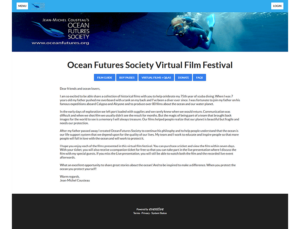
When the world shut down during the pandemic, I had the honor of serving as Festival Director for the Ocean Futures Virtual Film Festival — a groundbreaking online event that brought together historic ocean documentaries, live conversations, and a global audience.The festival provided rare access to classic films from the Ocean Futures library, many of which had never been available to stream online. Over the course of several months, thousands of viewers from around the world tuned in to watch these historic films, participate in live discussions, and connect with Jean-Michel Cousteau and the filmmakers — all from the comfort of their own homes.
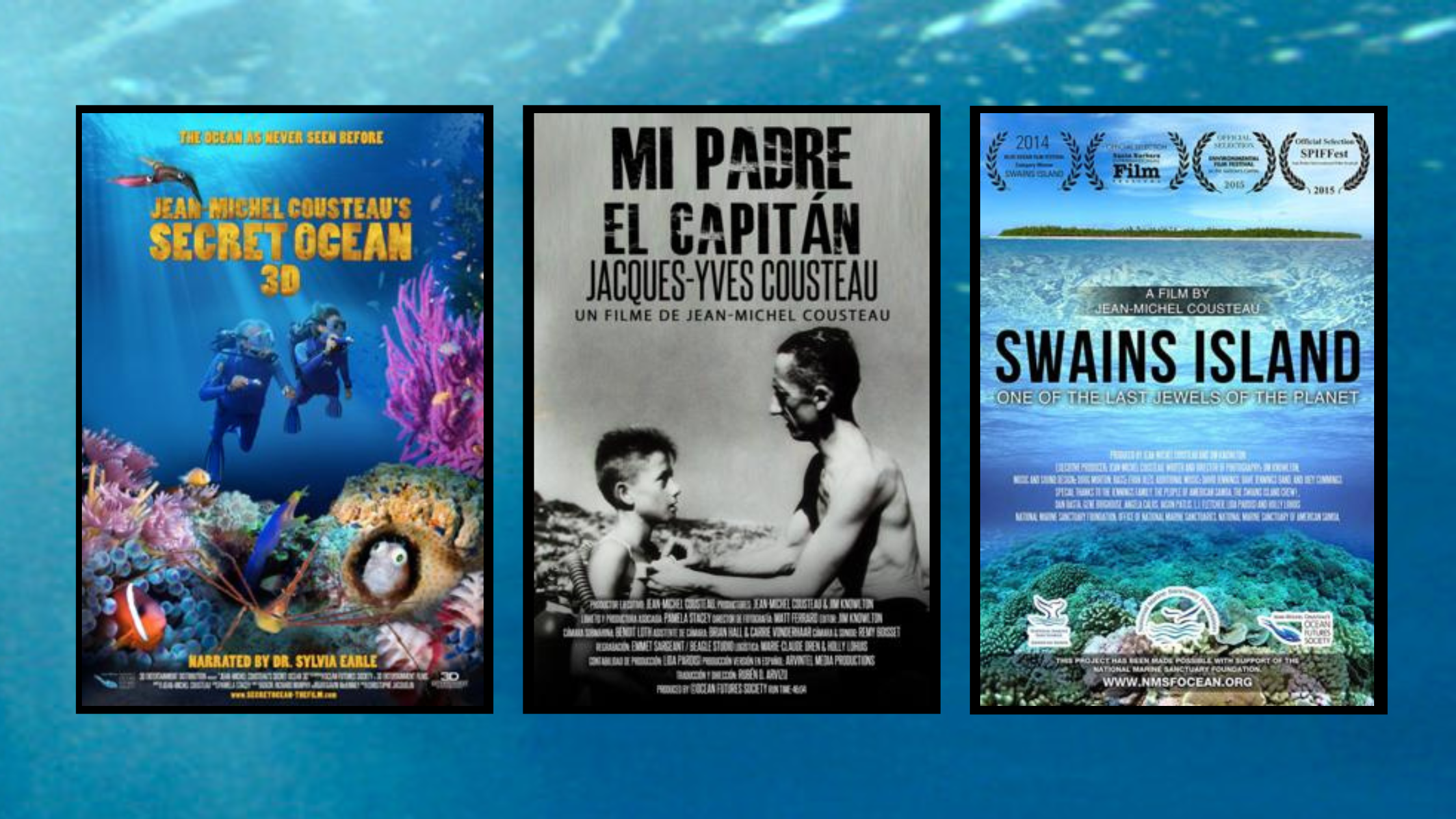
Our programming included Keiko: Born to Be Wild, Keiko: The Gate to Freedom, My Father the Captain – Jacques-Yves Cousteau, Swains Island – One of the Last Jewels of the Planet, and Jean-Michel Cousteau’s Secret Ocean — each one followed by a livestreamed Q&A where the creators and Jean-Michel shared behind-the-scenes insights and answered audience questions in real time.
In a moment when the world felt isolated, the Ocean Futures Virtual Film Festival offered a way to reconnect — not just with each other, but with the ocean, with storytelling, and with a legacy of environmental filmmaking. It was the first time many of these films had been presented in this format, and the first time audiences could engage with their creators in such an accessible, immediate way.
1. The Vision: Bringing Ocean Advocacy to a Global Audience
The Ocean Futures Virtual Film Festival was created with a clear mission:
- Share ocean-focused films that educate, inspire, and drive conservation action.
- Host live Q&A sessions with Jean-Michel Cousteau and a wide range of guest filmmakers.
- Ensure that, even during a global pandemic, important stories about our planet’s oceans could reach a worldwide audience.
Our motivation for taking on this challenge was simple: if we couldn’t gather in theaters, we would create a digital theater, one that could actually expand our reach.
2. Building the Festival from the Ground Up
To bring the vision to life, I built the festival infrastructure from scratch using the Eventive platform.
This included:
- Designing and launching the full festival website
- Loading all films, ensuring smooth playback for viewers worldwide
- Setting up ticketing and access control so audiences could easily participate
- Coordinating schedules for filmmakers, audiences, and special guests across multiple time zones
It was more than just putting films online—it was about curating an experience that felt as engaging and polished as any in-person festival.
3. Directing the Live Broadcasts
One of the most rewarding and memorable parts of the Ocean Futures Virtual Film Festival was directing the live Q&A broadcasts. These sessions brought the films to life in a whole new way, offering audiences the chance to hear directly from the people who helped create them, often years after the original production wrapped.
As director, my role involved:
- Organizing and moderating conversations between Jean-Michel Cousteau and the guest filmmakers
- Scheduling and conducting tech rehearsals to ensure everyone was camera-ready and connected
- Selecting and queuing up key film segments to highlight during the discussion
- Managing smooth timing and transitions between speakers, clips, and audience questions
- Broadcasting the experience live to audiences in multiple countries, seamlessly integrating video, voice, and visuals
What made this truly special was reconnecting with filmmakers who had been a part of these incredible documentaries, some of whom hadn’t spoken about the projects in years. Their reflections, behind-the-scenes stories, and personal insights added a whole new layer of meaning to the films. These were rich, thoughtful conversations that deepened our understanding of the work and rekindled the creative spirit that went into making them.
Even better: all of these live Q&As were recorded and are now available to watch on YouTube.
👉 You can find them embedded just below this section, so you can enjoy the same candid, inspiring, and sometimes surprising conversations that our live audiences did during the festival.
LIVE Q&A for Keiko: Born to be Wild w/ Jean-Michel Cousteau & Charles Vinick
LIVE Q&A for Keiko: The Gate to Freedom with Jean-Michel Cousteau and Jeff Foster
LIVE Q&A for My Father the Captain with Jean-Michel Cousteau and Céline Cousteau
LIVE Q&A for SWAINS ISLAND – One of the Last Jewels of the Planet� with Jean-Michel Cousteau, David Jennings, Hans Van Tilburg and Jim Knowlton
Live Q&A for Secret Ocean with Jean-Michel Cousteau, Sylvia Earle, Holly Lohuis and host Jim Knowlton
4. The Tech Behind the Stream
Creating a live virtual experience that feels smooth and effortless to the viewer takes far more than just clicking “Go Live.” Behind every livestreamed Q&A with Jean-Michel Cousteau and the guest filmmakers was a complex setup of technical systems, timing, coordination, and contingency planning.
Key tools included:
- Eventive for film hosting, ticketing, and audience access
- Zoom Webinar to host the live Q&A panels
- YouTube Live as the broadcast platform, linked via stream key
- Redundant internet connections, backup gear, and clear communication channels to ensure everything ran smoothly
In live production, you learn quickly that even the best-laid plans can shift. We knew that if anything went wrong — a speaker’s mic dropped out, a screen share failed, or a delay hit the livestream — we couldn’t hit pause or rewind. We had to stay calm, adapt in real time, and keep things moving.
That mindset was essential. From managing speaker handoffs to monitoring the stream quality, I stayed in constant communication with our team and panelists behind the scenes. Most viewers never knew how much was happening off-camera to make their experience feel natural and connected.
That’s the real work of a successful livestream — creating something so seamless that it disappears into the story.
5. What I Learned
Working on the Ocean Futures Virtual Film Festival was more than a technical challenge — it was a revelation.
I learned that we no longer need the approval of traditional broadcasters to share powerful films with the world. With the right tools and planning, we can bring people together across continents, present important stories, and connect audiences directly with the filmmakers who created them — all without relying on TV networks or gatekeepers.
I also discovered the emotional energy of going live. There’s a thrill and unpredictability to live broadcasts that makes every moment feel electric. Yes, it can be nerve-racking — but with practice, preparation, and a mindset of “go with the flow and enjoy the ride,” it becomes an incredibly fulfilling experience. When the pieces come together — the film clips, the guests, the tech, and the audience — it’s like conducting a live performance.
Most of all, I came away with a renewed appreciation for how technology can amplify human connection — and how storytelling can reach farther than ever before.
6. Livestreaming Services from Blue Ocean Productions
Today, I use the expertise gained from the Ocean Futures Virtual Film Festival to help other organizations succeed in the virtual space.
At Blue Ocean Productions, I offer:
- Livestream setup and consulting
- Technical troubleshooting before and during your event
- Full-service production for:
- Virtual events
- Hybrid events
- Webinars
- Community livestreams
If you would like to learn more about how we approach livestreaming and the value it can bring to your event, check out our Event Livestreaming with Blue Ocean Productions blog post.
Clients consistently share positive feedback about how professional, reliable, and impactful their events become with our support.
7. Conclusion: From Ocean to Anywhere
The Ocean Futures Virtual Film Festival proved that with creativity and technical direction, it’s possible to bring important stories to a global stage, even when gathering in person isn’t possible.
As Festival Director, I gained invaluable experience in livestreaming, interviewing, and technical production, which now fuels my mission at Blue Ocean Productions: to help organizations tell their stories powerfully online.
Santa Barbara Video Production Services – Professional & Creative
Looking for top-quality video production services in Santa Barbara? Blue Ocean Productions provides businesses with innovative, high-impact video solutions that capture your brand story and engage your audience. From on-location shoots to expert post-production editing, we ensure every detail is executed flawlessly.
Our Video Production Services Include:
- Promotional Videos: Engage customers and drive brand awareness
- Branding Videos & Sizzle Reels: Highlight your unique value and products
- Event Videography: Capture conferences, seminars, and live events with professional precision
- Training & Educational Videos: Educate your team or clients with clear, compelling content
- Testimonial Videos: Build credibility and trust with authentic customer stories
With years of experience in Santa Barbara video production services, we combine creativity, technology, and strategy to deliver videos that not only look professional but also drive results. Partner with us to create videos that enhance your brand presence, improve engagement, and stand out in today’s digital landscape.
Ready to host your seamless livestream event?
Contact Blue Ocean Productions today.
- Website: blueoceanproductions.com
- Address:3897 Market St Suite 103, Ventura, CA 93003
- Phone: 805-448-1482
Email: jim@blueoceanproductions.com
About Blue Ocean Productions
Blue Ocean Productions is a full-service video production and livestreaming company in Ventura, California. We specialize in corporate videos, promotional content, documentaries, events, and livestreams, delivering high-quality visuals and professional storytelling. Our team combines creativity, cinematic expertise, and advanced technology to produce engaging content that elevates brands and captivates audiences.
FAQs
Q1: What types of video services does Blue Ocean Productions provide?
A: Services include documentary editing, corporate and promotional videos, event coverage, livestreaming, webinars, hybrid events, and multi-camera productions.
Q2: Can you handle virtual or hybrid events?
A: Yes, Blue Ocean Productions has extensive experience directing livestreams and hybrid events, including technical setup, troubleshooting, and post-production.
Q3: How does your livestreaming service work?
A: We use professional platforms like YouTube Live and Zoom Webinar, combined with multi-camera setups, seamless transitions, and audience interaction, to deliver polished online events.
Q4: Do you offer post-production editing?
A: Yes, we provide professional editing including color correction, audio mastering, visual effects, and multi-camera synchronization for all video projects.
Q5: What makes Blue Ocean Productions different from other video companies?
A: Our combination of creative storytelling, technical expertise, and personalized service ensures high-quality videos and livestreams that maximize engagement and meet client objectives.